
Designing Your Lighting Room by Room: Where to Begin
A beautifully built home rarely suffers from too little light. It suffers from light that ignores how the family actually lives, walls cluttered with switch banks, and rooms that glare when they should glow. The fix is not more fixtures but a designed system, and the smartest projects begin where that design pays off most visibly.
A well-planned approach to smart lighting in Fort Myers turns the home’s signature spaces into its most refined ones. The best place to begin is the rooms where light shapes the entire experience. Here is how to prioritize them.
What room should I put smart lights in first?
The right starting point follows how the home is actually lived in. That means beginning in the spaces that define it: the main living area, the kitchen, and the primary suite. These rooms carry the most architectural ambition and the most daily life, so a designed system transforms them first.
The main living area
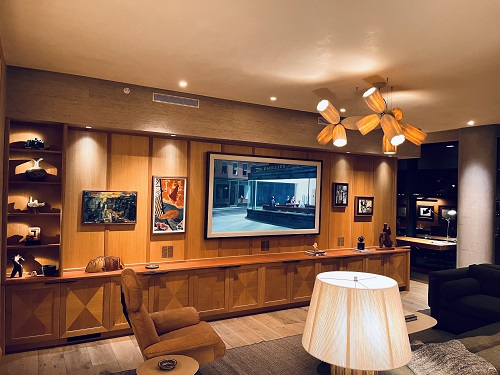
The main living area sets the tone for the entire home. Layered, dimmable illumination lets one space move from a bright gathering to an intimate evening, with no harsh overhead taking over.
A centralized lighting panel also clears the walls. Instead of a row of toggles by the entry, a single architectural keypad commands the whole room, preserving the clean sightlines the designer worked to create.
Kitchen
The kitchen rewards precision. Cooler, crisp light keeps islands and counters sharp for prep, while under-cabinet detail and accent light on open shelving add depth that a single ceiling fixture never achieves.
That same layering is what makes the room flexible. Tunable white carries the space from an energizing morning to a relaxed late dinner, and because it all lives on one panel, a single keypad press shifts the kitchen from prep to party.
The primary suite
The primary suite is where wellness enters the conversation. Tunable white light, often called human-centric lighting, shifts in tone across the day to echo natural daylight.
Light’s timing and color affect how well you sleep and how alert you feel. Warm, dim evening tones and cooler, brighter morning light work with the body’s circadian rhythm, so the suite restores rather than merely illuminates.
This approach to your first smart lighting upgrade focuses your attention where design, daily life, and wellbeing intersect. The signature spaces earn the investment of a fully realized system before anywhere else.
Are smart lights worth it in every room?
Yes, though not in the same way everywhere. A proper system treats the residence as one canvas, with every space on the same platform rather than a patchwork of disconnected switches.
The reason is consistency. When the whole home runs on one centralized system, a single scene can prepare the entire property for the evening, and the family never thinks about which room uses which control.
That said, the depth of features varies by space. Signature rooms justify full tunable scenes and layered control, while secondary spaces need only to join the system gracefully.
Mapping smart lighting ideas by room keeps the design intentional:
- Signature spaces. Main living areas, kitchens, and suites earn full scene control, tunable white, and architectural keypads.
- Everyday spaces. Studies, dining rooms, and guest suites benefit from dimming and scheduling on the same panel.
- Service and transition spaces. Pantries, hallways, and closets need clean, automatic control rather than elaborate scenes.
Leaving a few rooms on traditional switches breaks the experience. A guest reaching for a lone toggle in an otherwise seamless home feels the seam immediately. Approaching smart lighting room by room, with every space on one platform, is what makes a home feel genuinely whole.
The control method matters as much as the coverage. Choosing how each space responds to a touch, a panel, or a schedule shapes how effortless the finished residence feels.
What rooms are best for motion sensor lights?
Presence-based lighting belongs in the spaces you move through rather than linger in. Entries, staircases, hallways, dressing rooms, and wine cellars all benefit when light arrives before you do. Lights that respond to presence remove the small frictions of moving through a large home, and they make your space feel attended to even when no one is actively managing it.
Knowing where to install smart lights with sensors comes down to how a space is used:
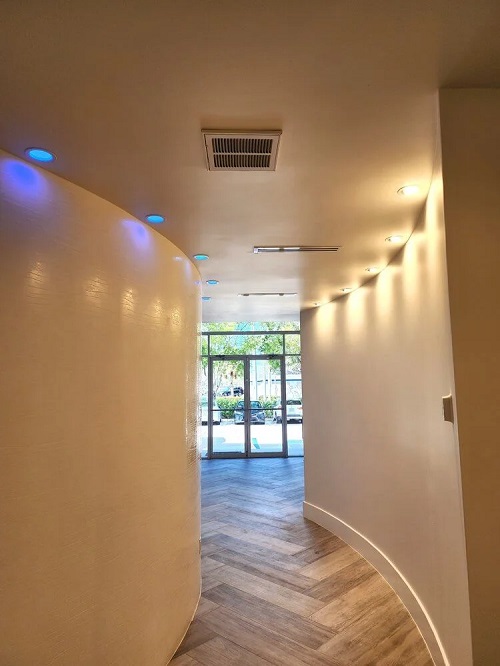
- Entries and staircases. Illumination arrives the moment you approach, which matters most when arms are full or the hour is late.
- Hallways and galleries. A corridor lights gently as you enter and rests once you pass, so no part of the home stays lit without reason.
- Dressing rooms and closets. Light greets you on entry and fades behind you, with no switch to find in the dark.
Security is the quieter benefit. Presence-aware exterior and perimeter lighting can signal an occupied, watched home, and it integrates with the broader security system rather than standing alone. The same fixtures do double duty after dark, since lighting that carries from the interior out to the lanai and grounds keeps the property feeling alive long after sunset.
There is a privacy dimension, too. A well-designed system keeps these routines running on a local, enterprise-grade residential network, so the household’s patterns stay inside the home rather than on a distant server.
Skip sensors where people settle in for long stretches, such as a study or media room. Light that fades when you sit still frustrates more than it serves, so those rooms call for deliberate scene control instead.
Who to contact for bespoke smart lighting in Fort Myers, FL?
Designing a home where light follows the family with quiet precision takes more than good fixtures, and that is exactly the work Liaison Technology Group lives for. As a certified Lutron Platinum and Crestron Platinum Elite dealer, our team designs centralized systems that erase wall clutter, support wellbeing, and protect the architecture you have invested in.
Whether you’re located close to Edison Mall or anywhere else in the area, we treat every project as a close working relationship, simplifying the technology so your home responds the way you want. Reach out to us today to walk through your home room by room and build a plan that fits how you actually live.